Hinduism

Hinduism
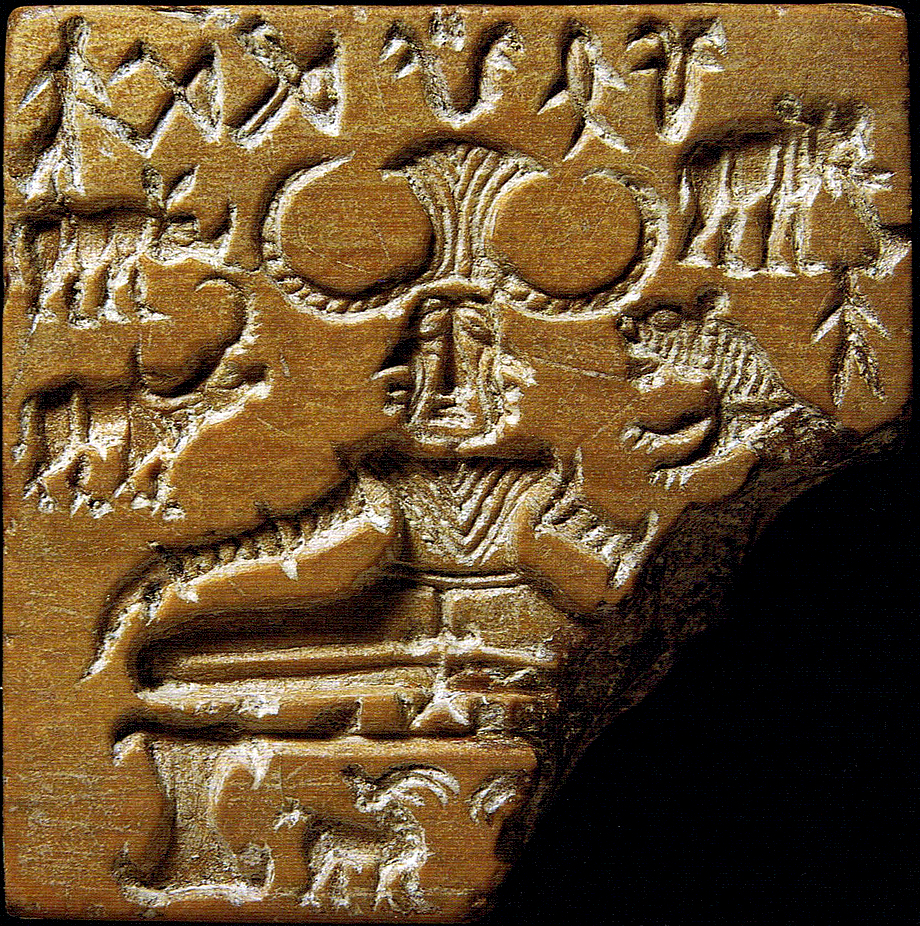
lord shiva in Indus Valley Civilization

Thursday, November 13, 2014

Puranas


         The Puranas (/pʊˈrɑːnəz/; singular: Sanskrit: पुराण purāṇa, "of ancient times") are ancient Hindu texts eulogizing various deities, primarily the divine Trimurti God in Hinduism through divine stories. Puranas may also be described as a genre of important Hindu religious texts alongside some Jain and Buddhist religious texts, notably consisting of narratives of the history of the universe from creation to destruction, genealogies of kings, heroes, sages, and demigods, and descriptions of Hindu cosmology, philosophy, and geography.The Puranas are frequently classified according to the Trimurti (Trinity or the three aspects of the divine).ThePadma Purana classifies them in accordance with the three gunas or qualities as Sattva (Truth and Purity), Rajas (Dimness and Passion) and Tamas (Darkness and Ignorance).

Puranas usually give prominence to a particular deity, employing an abundance of religious and philosophical concepts. They are usually written in the form of stories related by one person to another. The Puranas are available in vernacular translations and are disseminated by Brahmin scholars, who read from them and tell their stories, usually in Katha sessions (in which a traveling Brahmin settles for a few weeks in a temple and narrates parts of a Purana, usually with a Bhaktiperspective).

Hinduism


Hinduism has been called the "oldest religion" in the world and some practitioners refer to it as Sanātana Dharma, "the eternal law" or the "eternal way" beyond human origins. It prescribes the "eternal" duties, such as honesty, mercy, purity, self-restraint, among others. 


Hindu cosmology

In Hindu cosmology the universe is cyclically created and destroyed in the timespan of 4.32 billion years. Deeply rooted in Hindu literature including Vedas and Puranas, it is believed time is divided into four epochs or Yuga, of which we occupy the final. In roughly 430,000 years the final Avatar Kalki will end time. Shiva destroys all this existence while creating a new existence. Time starts over.
They describe the aspects of evolution, astronomy, astrology, etc. Creation and evolution begin anew.
The Hindu cosmology and timeline is the closest to modern scientific timelines and even more which might indicate that the Big Bang is not the beginning of everything, but just the start of the present cycle preceded by an infinite number of universes and to be followed by another infinite number of universes. 
The Rig Veda questions the origin of the cosmos in: "Neither being  nor non-being was as yet. What was concealed? And where? And in whose protection?…Who really knows? Who can declare it? When was it born, and whence came this creation? The devas were born later than this world's creation, so who knows from where it came into existence? None can know from where creation has arisen, and whether he has or has not produced it. He who surveys it in the highest heavens, He alone knows-or perhaps does not know." (Rig Veda 10. 129)